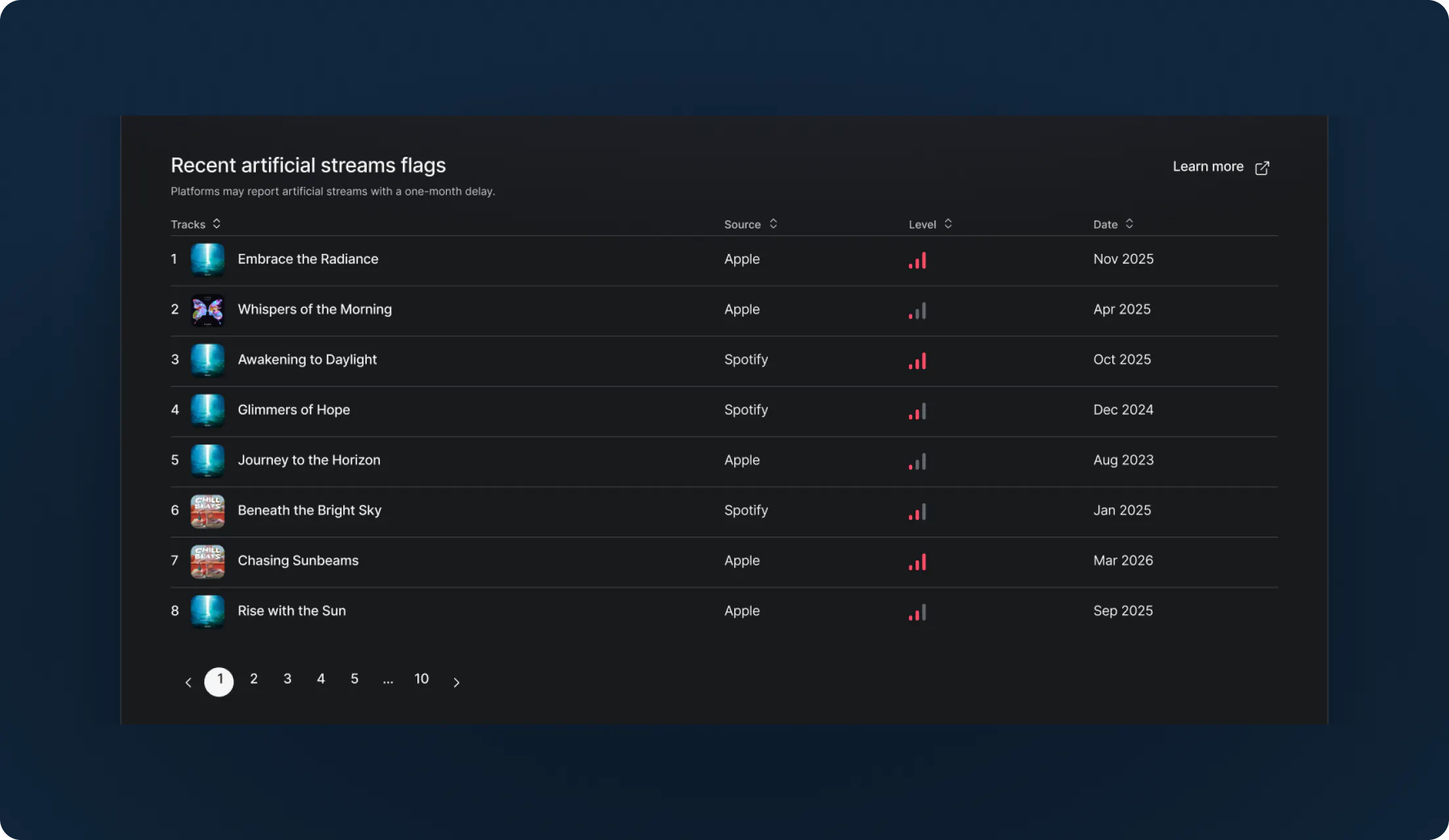
Jakarta — September 27, 2026 — Music distribution platform LANDR is expanding an artificial-intelligence-powered streaming fraud detection system developed with Mila – Quebec AI Institute. LANDR reports that the number of artificial streams flagged by Spotify across music it distributes fell by 95% between Q1 2025 and Q2 2026 following multiple fraud-prevention measures.
LANDR stressed that the reported reduction resulted from multiple fraud-prevention initiatives, rather than from the machine-learning system developed with Mila alone. The models were deployed in February 2026 as one component of LANDR's broader anti-fraud system.
How the system detects suspicious activity
According to LANDR, the system uses two machine-learning models developed over six months with Mila researchers.
One model assesses account profile and behavioral data. The other examines listening activity for patterns that are inconsistent with genuine audience behavior.
LANDR has since expanded the system to identify additional risk signals earlier in the distribution process. These include unusually high release frequency, catalogues that appear suddenly in large volumes, clusters of accounts sharing devices or payment information, and metadata designed to resemble established artist identities.
Activity flagged by the system is not automatically treated as fraud. LANDR says its anti-fraud team conducts human review before enforcement action is taken.
Streaming fraud and royalty distribution
Artificial streaming refers to plays that do not reflect genuine listening activity, including activity generated through bots, stream farms or compromised accounts.
The issue has become a significant concern for the recorded-music industry because streaming is a major channel for music consumption, while streaming royalties are allocated according to music usage on digital platforms.
IFPI launched its Streaming Integrity Initiative on September 14, 2026, establishing a common framework for preventing, detecting and responding to streaming fraud. The initiative is structured around five areas: Verify, Vet, Act, Share and Measure.
IFPI said streaming fraud can divert revenue that would otherwise flow to artists, songwriters, record labels, music publishers and other participants in the music ecosystem.
Distributors become an important point of prevention
The development of distributor-level anti-fraud systems means that monitoring can occur before music reaches streaming services.
LANDR said its expanded system can identify risk signals earlier in the distribution process, before releases reach streaming platforms.
That approach aligns with the broader framework established by IFPI's Streaming Integrity Initiative, which identifies distributors as an important point for rights verification, content vetting, fraud detection and enforcement.
However, LANDR's reported 95% figure should not be interpreted as a 95% reduction in streaming fraud across the entire music industry. The figure specifically refers to artificial streams flagged by Spotify on music distributed by LANDR, and LANDR attributes the reduction to multiple fraud-prevention measures implemented during the period.
AI helps identify risk
LANDR said its system is designed to help its teams identify patterns at scale, while enforcement decisions continue to involve human review.
That distinction matters because unusual listening patterns do not necessarily indicate fraud. A release can legitimately experience a sudden increase in listeners, for example.
The connection with AI-generated music
Streaming fraud is also becoming increasingly connected to the growth of AI-assisted and AI-generated music.
LANDR currently accepts music created with AI assistance, but requires artists to disclose AI-generated elements when submitting a release. The company also limits fully AI-generated submissions to 30 releases per month per subscriber and applies additional restrictions to certain types of content.
At the industry level, IFPI's Streaming Integrity Initiative also addresses risks associated with AI-generated content, including the need to vet content and potential AI-related rights issues.
These developments show that digital music distribution increasingly involves more than delivering audio files and metadata to DSPs. It also involves identity verification, rights ownership, streaming integrity, metadata accuracy and transparency around AI use.
For artists and songwriters, the changes place greater emphasis on accurate distribution data and authentic audience activity.